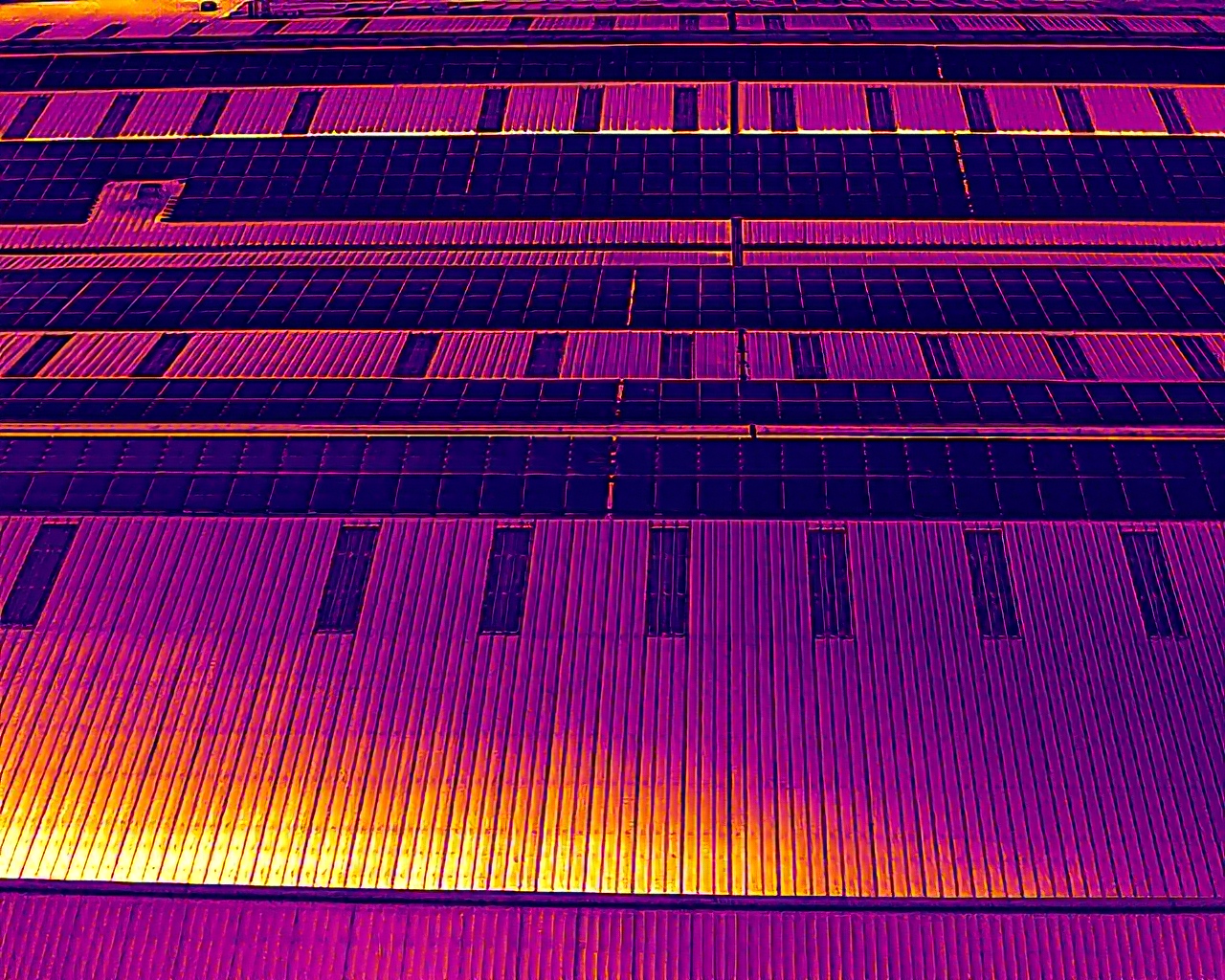
A thermal view of your array
We scan the agreed panels for hot spots and unusual temperature patterns. This helps identify areas that behave differently from neighbouring panels and may need further investigation.
Solar inspections · Edinburgh, East Lothian & Scotland
See your panels in two ways. We fly over the agreed solar array using both infrared thermal imaging and high-definition visual cameras, looking for temperature irregularities and visible signs that deserve a closer check.
For rooftop systems and ground-mounted solar arrays, the aim is clear: help you understand what we can see, where an area of concern is, and what to investigate next.
Visual + infrared capture
A useful inspection connects an area of interest with a recognisable part of the array. We combine wider views with selected closer images, so you or your maintenance contractor can relate a thermal pattern to the panels on site.
Our DJI inspection fleet includes Matrice 400 aircraft with H30T payloads, plus Matrice 4T and 4TD options. We select the equipment and flight plan around the installation.
The image here is a DJI demonstration photograph. The videos below show the technique on other projects.
What you get
Your inspection combines the thermal view with detailed visual imagery of the same array.
We scan the agreed panels for hot spots and unusual temperature patterns. This helps identify areas that behave differently from neighbouring panels and may need further investigation.
We use high-definition cameras to look for visible surface damage, dirt, bird droppings, debris, shading and other irregularities that can be seen from the flight position.
You receive the agreed thermal and visual inspection images, including closer views of areas of interest where capture is feasible. These give you or your maintenance contractor a useful record to work from.
We explain the observed irregularities and which areas warrant a closer check. We agree how these locations will be identified and whether you need a written report, annotated panel plan or video when preparing your quotation.
What we look for
A hot area alone does not prove the cause of a fault. Comparing it with the high-definition image adds context and helps direct an appropriate on-site check. Small, concealed or internal defects may require electrical testing or another specialist method.
Manufacturer background: DJI’s visual and thermal solar-inspection overview.
See the technique
These short DJI Enterprise demonstrations show Matrice 4T solar-inspection applications. The Matrice 4T is part of our current fleet.
Manufacturer demonstrations filmed on other projects. Your inspection coverage and deliverables are set out in your quotation.
A short DJI example of the Matrice 4T’s role in inspecting solar panels.
Video: DJI Enterprise · approximately 22 seconds.
Watch the solar-inspection example on YouTube →
A brief example of thermal solar-panel inspection using the Matrice 4T.
Published by DJI Enterprise · footage credited to ITASCAN · approximately 11 seconds.
Watch the thermal-inspection example on YouTube →
From booking to findings
It may identify thermal or visible irregularities worth investigating, but it does not establish every cause of reduced generation. Inverter data, shading, electrical testing and operating conditions may also need to be reviewed.
The inspection combines infrared and high-definition visual capture. Your quote confirms the delivered images and whether annotated findings, a written report, panel-location references or video are included.
Useful thermal results depend on suitable conditions and the system’s operating state. We plan the visit around the array and the inspection objective rather than choosing a time solely for convenience.
Send your location, array size and the reason for the inspection.